

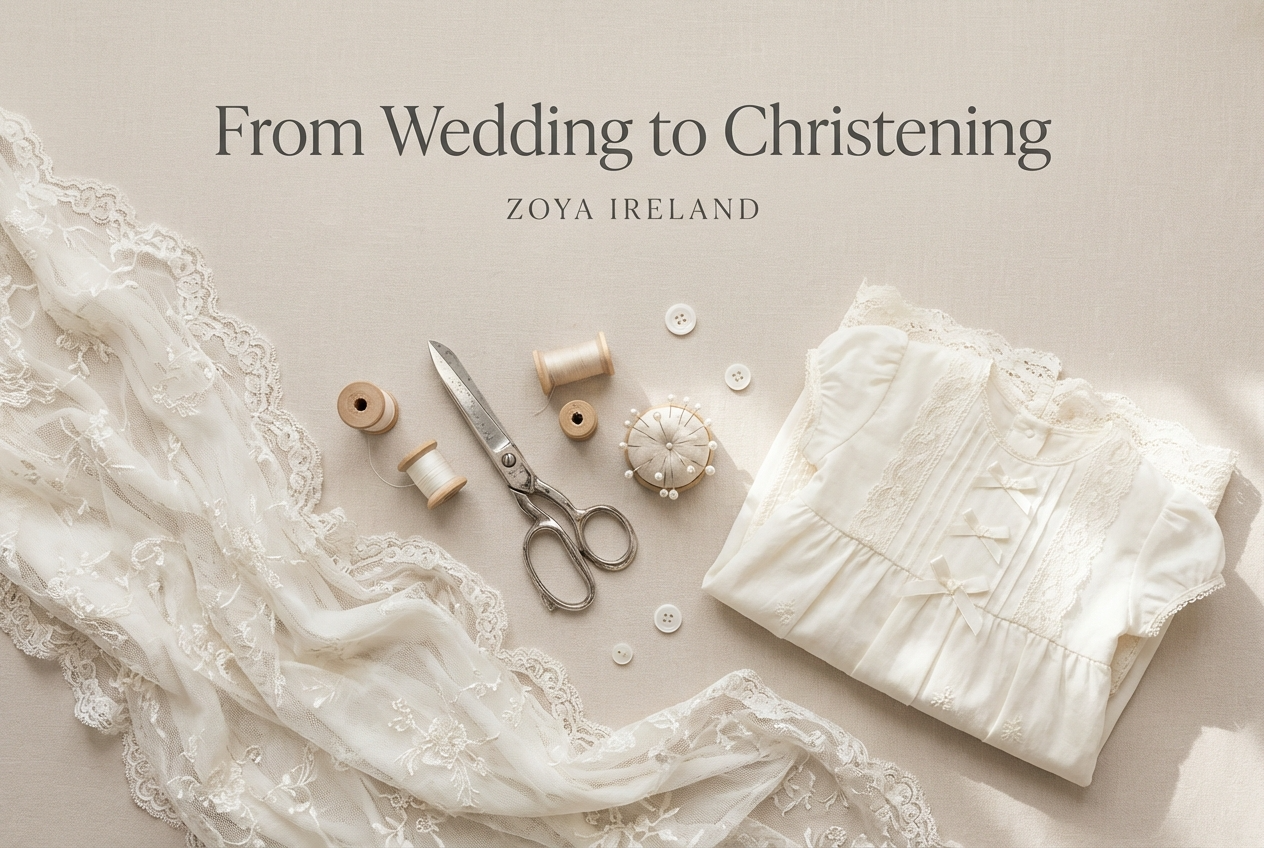
Transforming a Wedding Dress into a Christening Gown: A DIY Guide
TL;DR
- Sentimental Value: Repurposing your wedding dress creates a powerful "heirloom bridge" between your big day and your baby’s first milestone.
- Practicality vs. Emotion: Not every fabric works for a baby’s sensitive skin—I’ll help you spot the difference between "stunning lace" and "itchy nightmare."
- The "Plan B": If cutting up your gown feels too heartbreaking (or the fabric is yellowed), I’ll show you how to mix DIY elements with ready-made Christening dresses.
I was standing in my attic last Tuesday, dodging a rogue spiderweb, when I saw it. The big white box. You know the one. It’s been sitting there since 2015, gathering dust and memories in equal measure. My wedding dress.
I unzipped the garment bag, and the smell of lavender sachets and nostalgia hit me like a wave. It was beautiful. But then my "SEO brain" kicked in—that analytical part of me that hates waste and loves optimization. Why is this gorgeous silk just sitting here?
When my daughter, Saoirse, was born seven years ago, I toyed with the idea of cutting it up for her Christening. I didn’t do it. I was too scared I’d ruin it, and honestly, I was too exhausted to thread a needle. I ended up buying a lovely gown instead. But now, looking at that dress again, I realize what a missed opportunity that was to create something truly unique.
In Ireland, Christenings are massive. They are the baby equivalent of a wedding—the family gathering, the food, the photos that will end up on your Granny’s mantelpiece for the next three decades. There is something incredibly poetic about taking the dress you wore to start your family and turning it into the dress your child wears to be welcomed into the community.
So, grab a cup of tea (or a glass of wine, I won’t judge), and let’s talk about how to tackle this project without ruining your memories—or your sanity.
Is It Actually a Good Idea to Cut Up Your Wedding Dress?
This is the first question you need to ask yourself, and you need to be brutally honest. As a mom, I know the emotional weight attached to these things. As an expert in textiles and fashion, I also know the practical limitations.
First, look at the condition of the dress. Has it been professionally cleaned and preserved? If it’s been hanging in a damp wardrobe in Galway for five years, you might find yellowing or foxing (those little brown spots) on the fabric. Silk is a natural fibre; it breathes, but it also ages. If the fabric is compromised, it might tear when you try to sew it.
Secondly, consider the "itch factor." We talk about user experience (UX) in my line of work all the time. Well, your baby is the ultimate user. Wedding dresses are often structured with tulle, stiff netting, and heavy beading. That is a sensory nightmare for a four-month-old. A baby’s skin is five times thinner than ours. If you put them in scratchy polyester lace, they will scream through the entire ceremony, and no amount of Sudocrem will fix the mood.
The Golden Rule: Only use the softest layers for the lining (or buy new cotton lawn for the inside) and use the wedding dress fabric for the outer, decorative layer.
If you are hesitating—if the thought of taking scissors to your bodice makes you feel physically ill—stop. Don’t do it. There are other ways. You can use just a small piece of lace for a bonnet or a sash and buy one of the beautiful, ready-made Christening dresses available. It’s about balance. You want the sentiment, not the regret.
What Parts of the Dress Should You Actually Use?
Okay, you’ve decided to go for it. You’re brave, and I love that about you. Now, where do we start? You don't just hack away at the middle. We need to be strategic, like planning a keyword strategy but with satin.
The Skirt (The Goldmine):
Usually, the skirt has the most usable yardage of fabric. If you had a ballgown or an A-line dress, you are in luck. This large expanse of fabric is perfect for the long, flowing skirt of a traditional Christening gown. In Irish tradition, the gown is often quite long, draping well past the baby’s feet—it looks stunning in photos when you’re holding the baby at the font.
The Lace Appliqués:
Did your dress have lace detailing? These are precious. You can carefully unpick these (using a seam ripper, not scissors!) and re-apply them to the bodice or hem of the new gown. This is a great way to transfer the "soul" of your wedding dress without needing to use the heavy structural fabric.
The Buttons:
Oh, I love covered buttons. If your dress had a row of satin-covered buttons down the back, harvest them! Using these on the back of the Christening gown is a subtle, classy nod to the original garment.
Avoid the Bodice:
Unless your wedding dress was unstructured and boho, the bodice is likely full of boning, interfacing, and sweat (sorry, but it’s true!). It’s usually too stiff and shaped for a baby’s soft, round tummy. Leave the bodice alone.
Pro-Tip from PJ: Before you cut anything, wash your hands. Then wash them again. Oils from your skin can stain satin and silk invisibly, only for the marks to show up years later. Treat the fabric like it’s radioactive gold.
Do You Need to Be a Professional Seamstress?
Let’s manage expectations here. I can optimize a website’s backend in my sleep, but I am an "enthusiastic amateur" at best when it comes to sewing.
If you are planning a simple conversion—taking a large piece of satin and using a basic pattern—you can do this if you are comfortable with a sewing machine. There are wonderful patterns available online (look for "heirloom sewing patterns").
However, if your wedding dress is complex—think layers of chiffon, intricate beading, or slippery bias-cut silk—you might want to outsource. There is no shame in being the project manager rather than the labourer!
Find a local dressmaker or seamstress in your town. In Ireland, we are blessed with amazing local craftspeople. Bring them your dress and a picture of what you want. Explain that you want to create a Christening gown. They will be able to tell you immediately if the fabric will work.
The "Hybrid" Approach:
This is my favourite method for busy mums. Buy a simple, high-quality white cotton or silk slip dress for the baby. Then, use your wedding dress fabric to create an "over-dress" or a long, detachable skirt.
- Benefit 1: The fabric touching the baby is guaranteed to be soft and new.
- Benefit 2: You use less of your wedding dress.
- Benefit 3: It’s much easier to sew.
This approach ensures the baby is comfortable, but the aesthetic is pure heirloom magic. It’s the best of both worlds—like getting high traffic and high conversion rates.
How to Care for the Gown After the Big Day?
You’ve made the dress. The Christening was beautiful. The baby only spit up a tiny bit (and you caught it with a muslin cloth like a ninja). Now what?
Do not just throw it in the wash. Please. I am begging you.
If you used silk or vintage satin, water can leave permanent rings. You need to have the gown professionally dry-cleaned immediately after the event. Don't wait. Stains set over time.
Once it’s clean, you need to store it properly. We are talking about creating a legacy here. This is the dress you might want to pass down to your grandchildren (scary thought, I know!).
- Acid-Free Tissue Paper: Stuff the bodice and folds with acid-free tissue paper to prevent deep creases.
- The Box: Store it in a breathable, pH-neutral box. Do not use a plastic bag! Plastic traps moisture and emits gases that yellow fabric over time.
- Location: Store it in a cool, dry place. Not the attic (temperature fluctuations) and not the basement (damp). The top shelf of a wardrobe in a spare room is ideal.
Think of this as "content maintenance." You wouldn't publish a great article and then let the links break, right? You need to maintain the asset so it holds its value.
The "Can I Do This?" Checklist
Before you grab the scissors, run through this quick audit. If you answer "No" to more than two, consider buying new Christening dresses and using your gown for accessories instead.
| Factor | Question | Ideal Answer |
|---|---|---|
| Fabric Condition | Is the fabric free of yellowing, mould, or foxing? | Yes |
| Fabric Type | Is the material soft enough (silk, satin, cotton) rather than scratchy (stiff tulle, synthetic lace)? | Yes |
| Volume | Is there enough fabric in the skirt to cut a full baby gown pattern? | Yes |
| Emotion | Can you make the first cut without crying or feeling regret? | Yes |
| Skill/Budget | Do you have sewing skills OR the budget to hire a seamstress? | Yes |
| Time | Is the Christening more than 4 weeks away? (Rushing leads to mistakes!) | Yes |
How to Use This Knowledge in Practice?
Listen, I know life is busy. Between school runs, work deadlines, and trying to keep the house from looking like a bomb hit it, taking on a major sewing project might feel overwhelming. And that is okay.
You don't have to do it all.
If reading this made you realize that your wedding dress is better left intact, or that the fabric just isn't right for a baby's sensitive skin, don't feel guilty. The most important thing is that your little one is comfortable and you are stress-free on the big day.
At ZOYA, we understand that balance between tradition and modern convenience. We have curated a stunning collection of Christening dresses that give you that heirloom look without the stress of DIY. From vintage-inspired lace to simple, elegant satin, you can find something that feels just as special.
Here is my suggestion for you:
- Check your wedding dress. If it’s viable, take a swatch to a local seamstress this week.
- If it’s not, browse our collection of Christening dresses. You might find one that matches the vibe of your wedding dress perfectly.
- Consider using a piece of your wedding veil to make a simple headband or sash for the ZOYA dress. That way, you get the sentimental connection with zero stress.
You’ve got this, Mama. Whether you sew it or buy it, it’s going to be a beautiful day.
Chat soon,
PJ x
Have a look at our other articles on similar topics:
1. How to Choose the Perfect Christening Gown for Your Baby
💡 Since the current article discusses creating a gown, this guide offers complementary advice on what features and styles to look for in a perfect gown, whether DIY or purchased.
2. Christening Gown vs. Christening Dress: What's the Difference?
💡 This article helps clarify terminology and style differences, which is useful context for someone planning to design or sew a specific type of outfit from a wedding dress.
3. Top 5 Fabrics for Christening Gowns: A Comprehensive Guide
💡 The current article mentions fabric suitability for repurposing; this guide provides deeper technical knowledge on which fabrics work best for Christening attire.
4. Preserving Your Baby's Christening Gown: Tips for Long-Term Storage
💡 If a parent is repurposing an heirloom wedding dress, they likely value preservation; this article teaches them how to care for the new creation for future generations.
5. Modern vs. Traditional Christening Gowns: Which Style Suits Your Baby?
💡 This piece helps the reader decide on the aesthetic direction for their DIY project, comparing traditional styles (like the wedding dress source) with modern cuts.