

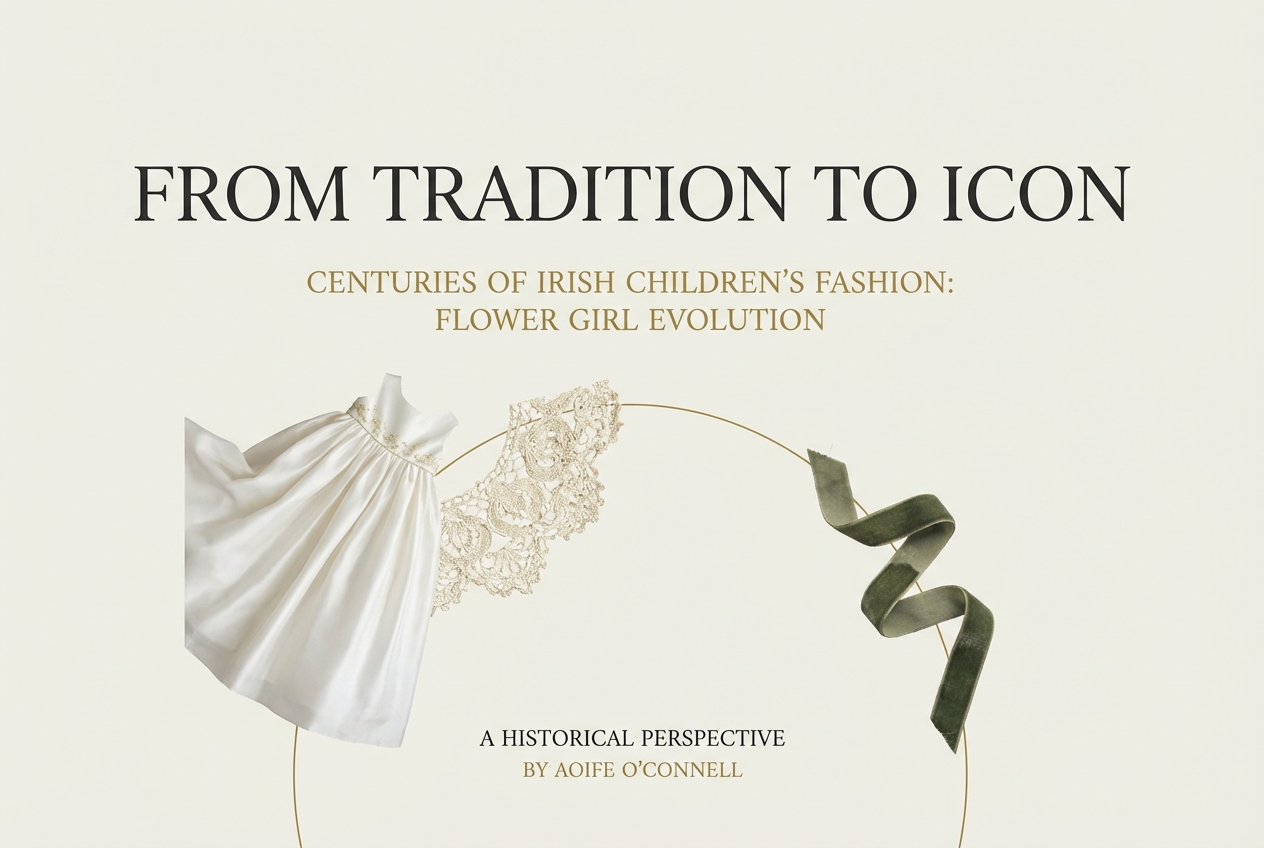
From Petal Baskets to Fashion Statements: The Reinvention of the Flower Girl Dress
I was standing backstage at a children's fashion showcase in London last autumn when a six-year-old walked past me in a hand-dyed silk organza gown with botanical embroidery so intricate it could have hung in a gallery. She was there to model a bridal collection's flower girl range, and she moved through the room with the self-possession of someone who understood, perhaps instinctively, that she was wearing something significant. I turned to the designer beside me and said, "When exactly did the flower girl become the most interesting person at a wedding?" She laughed and replied, "Somewhere between Pinterest and pandemic weddings."
That exchange stayed with me, because it captures something genuinely fascinating about how the flower girl dress has evolved from a charming afterthought into a legitimate fashion category with its own design language, cultural weight, and creative ambition.
The Ancient Origins Nobody Talks About
The flower girl tradition is far older than most people assume. Its roots stretch back to ancient Rome, where young girls walked ahead of the bride scattering grain and herbs to bless the path and ward off evil spirits. The emphasis was not on the child's appearance but on the symbolic act: a girl on the threshold of womanhood ushering in fertility and good fortune. The clothes she wore were secondary, usually just a cleaner version of her everyday tunic.
By the Elizabethan era, the role had become more formalised in British and Irish wedding traditions. Flower girls began carrying garlands of fresh flowers and wearing white or pale dresses to symbolise purity and innocence. But even then, the dress itself was rarely designed specifically for the occasion. It was typically a child's Sunday best, perhaps with an extra ribbon or a fresh collar added for the day.
The idea that a flower girl should have a dedicated, purpose-made dress is surprisingly modern. It belongs firmly to the twentieth century, and its rise tells us as much about changing attitudes toward childhood, fashion, and weddings as it does about fabric and silhouette.
The Mid-Century Moment: When Matching Became Mandatory
The 1950s and 1960s marked a turning point. Post-war prosperity, the explosion of bridal magazines, and the growing influence of Hollywood wedding scenes created a new expectation: the flower girl should look like a miniature version of the bride. White or ivory dresses with full skirts, petticoats, and satin sashes became the standard. The flower girl dress was no longer an accessory to the wedding but a visual extension of the bridal aesthetic.
This matching impulse had interesting consequences. On one hand, it elevated the flower girl's status within the wedding party, giving her a clearly defined visual role. On the other, it often meant dressing a small child in a scaled-down adult garment that prioritised appearance over comfort. Anyone who has seen a photograph of a 1960s flower girl standing stiffly in layers of scratchy tulle, her face a portrait of endurance, knows exactly what I mean.
The cultural expectation was clear: the flower girl existed to look adorable, to complement the bride, and to hold still long enough for the photographs. Her own experience of the day was, at best, a secondary consideration. It is remarkable, when you think about it, how long this approach persisted.
The Rebellion of the 1990s and Early 2000s
Something shifted in the final decade of the twentieth century. As weddings became more personal and less formulaic, the flower girl began to break free from the miniature-bride template. Designers started experimenting with colour: soft pinks, buttercup yellows, powder blues. The all-white orthodoxy cracked, and suddenly a flower girl dress could reflect the wedding's colour palette rather than simply mirroring the bridal gown.
The early 2000s brought another revolution: the acceptance of comfort as a legitimate design priority. Children's fashion designers began applying principles from everyday childrenswear to occasionwear. Bodices were cut to allow movement. Fabrics were chosen for softness as well as appearance. Waistbands were elasticated rather than rigid. The flower girl was finally being designed for, not merely dressed up.
Was this shift driven by changing attitudes toward childhood autonomy? By the influence of celebrity weddings where flower girls wore custom creations by major fashion houses? By the simple, practical observation that uncomfortable children make for terrible wedding photographs? Probably all three, in varying proportions. But the result was a genuine improvement in both the aesthetic and experiential quality of the flower girl dress.
The Digital Age: Pinterest, Instagram, and the Rise of the Statement Flower Girl
And then came social media. The impact of Pinterest and Instagram on wedding fashion cannot be overstated, but its effect on the flower girl category has been particularly transformative. Suddenly, the flower girl was not just a participant in the wedding but a content opportunity. Photographs of beautifully dressed children scattering petals became some of the most shared and saved images in the wedding space.
This visibility created commercial incentive for designers to invest more creativity and craftsmanship in flower girl dresses. The result, especially in the past five years, has been an extraordinary expansion of what a flower girl dress can be. Hand-dyed ombre skirts. Botanical embroidery depicting the flora of the wedding venue. Sustainable fabrics sourced from ethical suppliers. Modular designs where the skirt detaches for easy play. Custom colour-matching to the exact shade of the bridesmaid dresses.
In Ireland, this trend has taken on a distinctively local character. Celtic-inspired lace patterns, nods to Aran knitting traditions in textured bodices, and colour palettes drawn from the Irish landscape: sage greens, heather purples, Atlantic greys. The flower girl dress has become a canvas for cultural expression, not just sartorial decoration.
The Sustainability Question
No discussion of contemporary flower girl fashion is complete without addressing sustainability, and here the conversation becomes genuinely interesting. A flower girl dress is, by definition, a garment worn once. Perhaps twice, if the family attends another wedding soon after. This makes it a prime candidate for the kind of critical scrutiny that the slow fashion movement has brought to the entire clothing industry.
Some designers have responded with dresses made from organic cotton, recycled tulle, or deadstock fabrics. Others have embraced the concept of heirloom dresses designed to be passed down through families, with construction quality that can withstand decades of storage. A third approach involves convertible designs: a formal flower girl dress that can be shortened, restyled, or accessorised differently for subsequent occasions, effectively becoming a multi-use garment.
The most compelling solutions I have seen combine all three approaches. A well-made dress in sustainable fabric, designed with enough versatility to serve multiple purposes, and constructed to last long enough to be worn by siblings, cousins, or the next generation entirely. This is where fashion design meets genuinely thoughtful problem-solving, and the results are often more creative and more beautiful than their disposable alternatives.
Where We Are Now: The Flower Girl as Fashion Protagonist
So here we are in 2026, and the flower girl has completed a remarkable journey from symbolic walk-on role to fashion protagonist. The best contemporary flower girl dresses are not simplified versions of adult garments. They are purpose-designed pieces that respect the specific needs of a child's body, the practical demands of a long wedding day, and the aesthetic ambitions of modern wedding styling, all simultaneously.
What fascinates me most is that this evolution mirrors broader shifts in how we think about children within adult-centred events. The flower girl is no longer expected to be a silent, decorative presence. She is a participant with her own experience, her own comfort needs, and, increasingly, her own style preferences. The dress reflects this change: it is designed to be worn, not just displayed.
Will the flower girl dress continue to evolve? Almost certainly. I expect to see more technology-enhanced fabrics: temperature-regulating materials, stain-resistant treatments, even garments with subtle structural engineering that allows a child to move freely while maintaining a formal silhouette. The next chapter in this story is being written right now, one wedding season at a time.
For those of you in the midst of planning, explore the current collection of flower girl dresses at ZOYA Fashion. You will find designs that honour this rich tradition while embracing everything the modern flower girl deserves: beauty, comfort, and the freedom to scatter petals with abandon.
Further reading on this topic:
- Dressing Your Kids for Special Occasions with a Celtic Touch
- From Tradition to Modernity - The Evolution of the Communion Dress in Culture and Fashion
- The Complete Flower Girl Dress Checklist for Irish Summer Weddings 2026
- Flower Girl Dress Sizing and Fit: An Expert Guide to Getting It Right First Time
- My Top 5 Flower Girl Dress Moments: Wedding Season Styling Diary 2026